
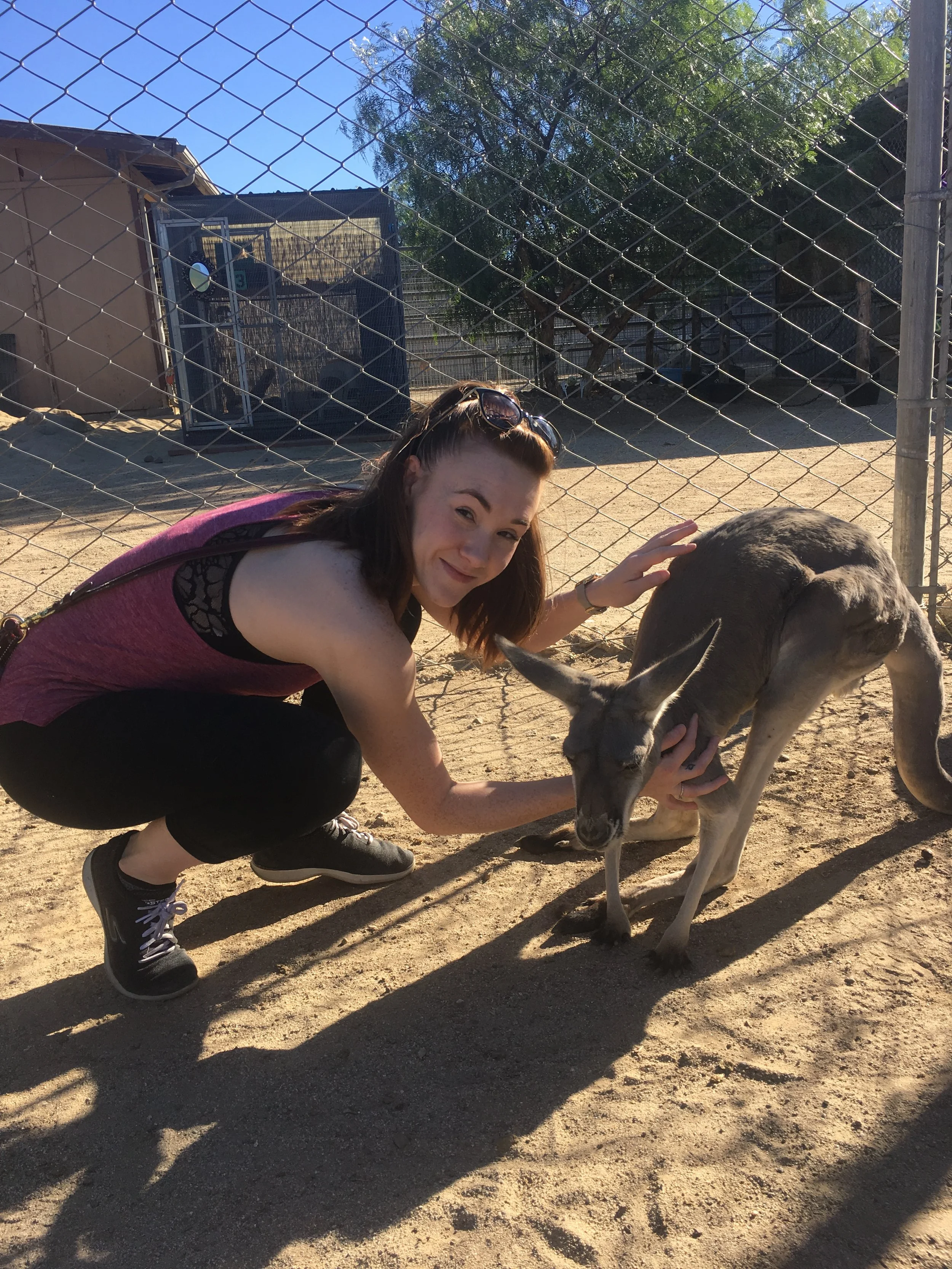
Hi, I’m Jasmin Turner.
I’m a neuroscience researcher, college psychology teacher, neurodivergent coach, and someone who genuinely loves understanding how brains work.
I grew up on a little farm just outside London.
In 2014, I moved to sunny California and fell in love with mountains, hiking, and of course… the Dodgers.
For most of my career, I studied and supported neurodivergent people from the outside. I worked with children and families, spent years in neuroscience research, taught psychology, and tried to understand why some brains experience the world so differently.
Then I was diagnosed with ADHD.
It was a confusing experience. I already knew the science, but suddenly it wasn't just something I taught or researched, it was something I was living, and it didn’t match what the “textbook” had taught me.
One part of me felt relief. So many things made sense: why starting tasks felt difficult, why emotions could feel so intense, and why I could be incredibly capable one day and completely overwhelmed the next.
Another part of me felt angry. I felt angry for little Jasmin, who suffered more than was necessary. The version of Jasmin that felt misunderstood, isolated and lost because she didn’t understand what was different.
It turns out, being neurodivergent isn’t all that bad once you understand what your brain needs.
Now I help other neurodivergent humans understand their brains and build skills to feel less overwhelmed.
I enjoy taking what we've learned from neuroscience and psychology and turning it into practical strategies that fit real life. No one-size-fits-all neurotypical crap. I bring curiosity and a commitment to finding approaches that work for my clients brain.
I know what it's like to question yourself because your brain doesn't seem to follow the rules everyone else is using. I also know how much can change when you start understanding how it works.
If you're looking for someone who will meet you with understanding, compassion, and a whole lot of brain knowledge, I'd love to work with you.

The frameworks behind my approach
Cognitive behavioral principles
Our thoughts, emotions, and behaviors all influence one another. We'll identify unhelpful thinking patterns, investigate self-defeating beliefs, and develop practical strategies that support lasting change.
Acceptance & Commitment (ACT) principles
Rather than fighting difficult thoughts and emotions, we'll learn how to make room for them while staying connected to what matters most. The goal isn't to eliminate discomfort (that’s part of being human), it's to build a meaningful life alongside it.
Positive Psychology
We'll spend just as much time exploring what's right with you as what feels difficult. By identifying your strengths, values, interests, and moments of success, we can build a life that feels authentic and sustainable.
Neuroscience
I help you understand why your brain responds the way it does. Together, we'll explore how attention, emotions, executive functioning, sensory processing, and your nervous system influence daily life—because it's much easier to work with your brain once you understand it.
I believe understanding comes before change. Instead of asking "What's wrong with me?" we'll ask, "What is my brain trying to do?" That shift in perspective can open the door to more self-compassion, effective strategies, and less stress.
Publication and Presentation Highlights
Turner, J. M., Byrge, L., Richardson, H. et al. (2025). Social inference brain networks in autistic adults during movie-viewing: functional specialization and heterogeneity. Molecular Autism, 16.
Paul, L. K., Turner, J. M., Sung, S., & Elison, J. T. (2024). Social and communication development in infants with isolated agenesis of the corpus callosum. The Journal of Pediatrics: Clinical Practice, 14.
Haisley, L. D., Hantzsch, L., Glick, A. R., Turner, J. M. et al. (2025). Adaptive functioning development in infants with agenesis of the corpus callosum. Pediatrics, 155(5).
Su, J. J., Paul, L. K., Graves, M., Turner, J. M., & Brown, W. S. (2023). Verbal problem-solving in agenesis of the corpus callosum: Analysis using semantic similarity. Neuropsychology, 37(5).
Turner, J. M., Haisley, L. D., Hantzsch, L. et al. (2023). Emotion expression in infants with agenesis of the corpus callosum: The role of callosal connectivity in early temperament. Journal of the International Neuropsychological Society, 29.